
Why Hatton Garden Still Matters for Bespoke Jewellery
Walk down Hatton Garden on any weekday morning and it's clear why it's called London's jewellery quarter. Window after window of diamonds, couples pausing to browse, traders who've known each other for years greeting one another by name. This isn't a street where jewellery just happens to be sold - it's where London's jewellery trade actually took root. Daniel's workshop isn't one of those shopfronts, though. It's tucked just off Leather Lane, a few minutes from the main strip, and that's very much on purpose.
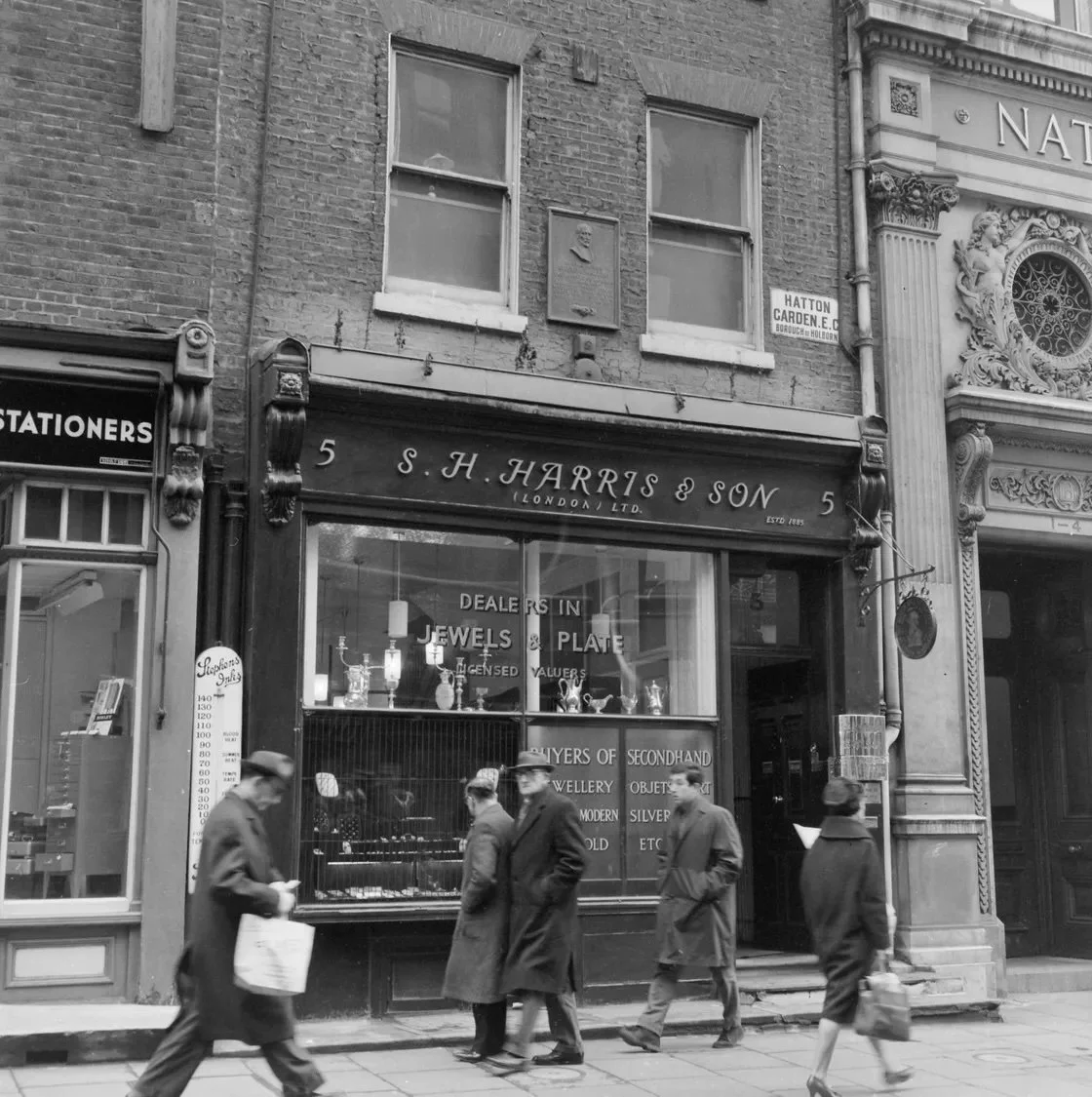
©London Museum/ Henry Grant Collection
A Trade with Deep Roots
The street gets its name from Sir Christopher Hatton, a favourite of Elizabeth I, who was given the land in the late 1500s. For a long time it was just a smart residential address, that had nothing to do with jewellery. That came later, as goldsmiths, diamond dealers, setters and polishers started setting up close to one another, near to the City in the 1800s.
That closeness is what shaped the area. Hatton Garden didn't become London's jewellery quarter because of one big name or a single shop - it grew because everyone needed each other close by. Cutters, setters, polishers, dealers, all within a few streets of one another, so a stone could go from rough to finished ring without ever leaving the neighbourhood. Around 300 jewellery businesses still operate here today, making it the largest cluster of independent jewellers in the UK.
More Than a Postcode
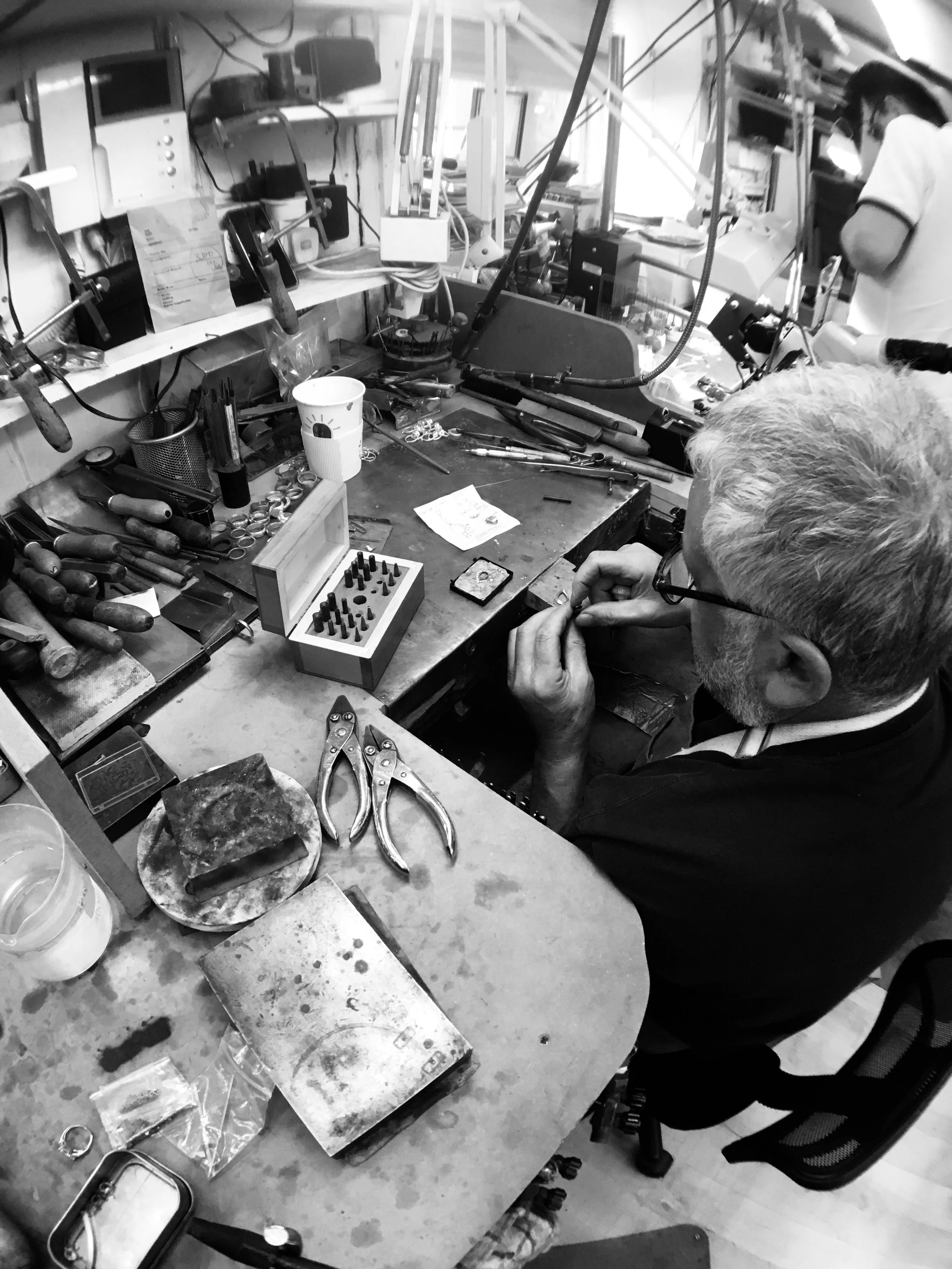
Spend any time in Hatton Garden and you notice how much of it runs on relationships. People here have often worked together, or known of each other, for decades. Skills get handed down too, frequently within the same family - Daniel trained under his father Michael around the corner from the workshop where he now makes his jewellery.
It also means Daniel is never working in isolation. Need a particular diamond, or an unusual sapphire? That's a conversation with a dealer he's dealt with for years, not an anonymous order placed online. Want a second opinion on a tricky setting? There's a setter a few doors down who'll give a straight answer. None of that gets built quickly, and it’s based on trusted relationships. Being a short walk away from Hatton Garden means Daniel still gets all of that connection, while keeping his own space small and quiet - somewhere to sit down properly with a client, rather than a busy shop window people wander past.
Why It Still Matters Today
It's tempting to think location doesn't matter much anymore, now that so much jewellery gets bought online without anyone leaving the house. For a lot of jewellery, that can be true. But for genuinely bespoke work, being in Hatton Garden still makes a real difference. You can see stones in person rather than on a screen. You're working with someone who has real relationships with the specialists a tricky piece might need. And there's a level of hands-on craft that gets harder to hold onto once a business grows past one workshop - which is part of why Daniel has stayed small and stayed just off the main strip, rather than taking a shop window among the more off-the-shelf displays.
It's also just a genuinely interesting place to spend an afternoon. Not many streets in London let you watch a trade still being worked the way it was generations ago.
What This Means for You
Commission a piece with Daniel and you're not just getting something made in London - you're getting something made by someone who's part of a working tradition that's been going in these few streets for well over a century. It's why consultations happen in person at the workshop without the pressure of a passing footfall trade, and why sourcing a stone usually means Daniel walking over to collect it from someone he's known for years.
Frequently Asked Questions
-
The trade took hold through the 19th century as jewellers, diamond merchants and craftspeople clustered together for convenience and shared expertise. It remains the largest concentration of independent jewellers in the UK today.
-
For bespoke work specifically, being based near Hatton Garden gives a jeweller direct access to gemstone merchants, specialist setters and generations of trusted relationships - all of which shape both the sourcing and the quality of a commissioned piece.
-
Yes. Daniel's workshop is just off Leather Lane, a short walk from the main Hatton Garden strip. Consultations take place in person by appointment - see what happens at a consultation for more detail.
Visit the Workshop, Away From the Crowds
Daniel's workshop sits just off Leather Lane, away from the shop windows on Hatton Garden - a quieter spot where every piece is still made by hand, one at a time. Arrange a consultation and come and see the difference for yourself.